 Senti
Senti
For Earning Platforms, Trading Apps & Fintech Products
Ship trading. Skip the build.
An API for Trade Account provisioning, execution, telemetry, and reporting. Your users never leave your product; you keep the brand, billing, and customer relationship.
One integration sits on the execution infrastructure behind Senti's live beta. These figures describe real infrastructure activity and availability. They are not investment returns, yield projections, or guarantees of trading performance.
Embedded execution in production. Zero Senti branding exposed.
An active earning platform completed native integration with Senti's non-custodial execution engine. End users trade and earn entirely within the partner app, unaware of Senti's underlying infrastructure.
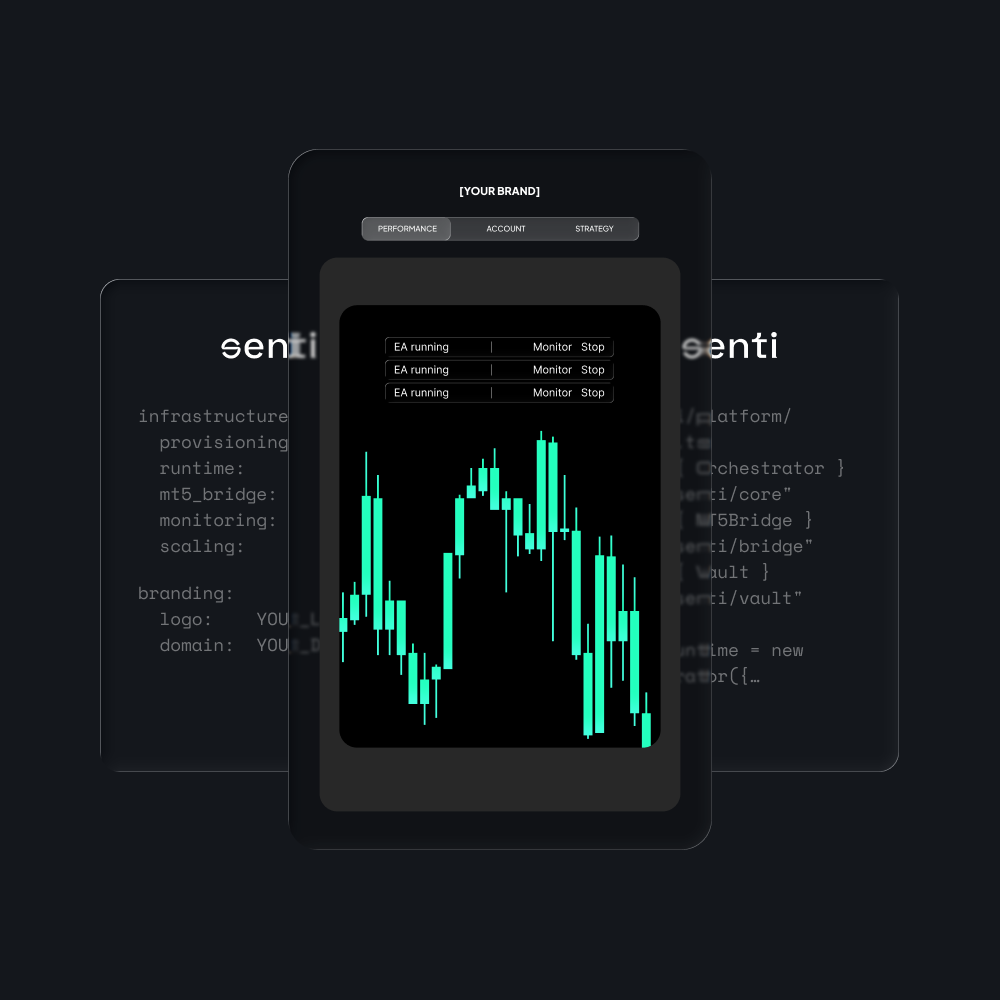 Documented integration flow
Users stay in your app. The broker holds the capital.
A documented integration pattern showing how Senti powers non-custodial automation under the hood:
Partner app + funding flow → Broker account → Senti API → MT5 FX/Gold execution → Real-time telemetry to partner app
- 100% Whitelabeled Experience: Users remain entirely within your product UI, never touching a Senti interface.
- Direct Broker Custody: Client capital remains securely deposited with regulated MT5 brokers.
- Pure Execution Middleware: Senti provides execution pipelines and runtime monitoring without touching user funds.
- Zero Outcome Claims: Senti operates the software layer; we do not promise or guarantee partner trading outcomes.
The feature your users see hides an infrastructure business
Adding automated trading to an existing application is never just a single API endpoint. Managing broker connections, handling disconnects, and syncing account state turns your core product team into an MT5 infrastructure maintenance desk.
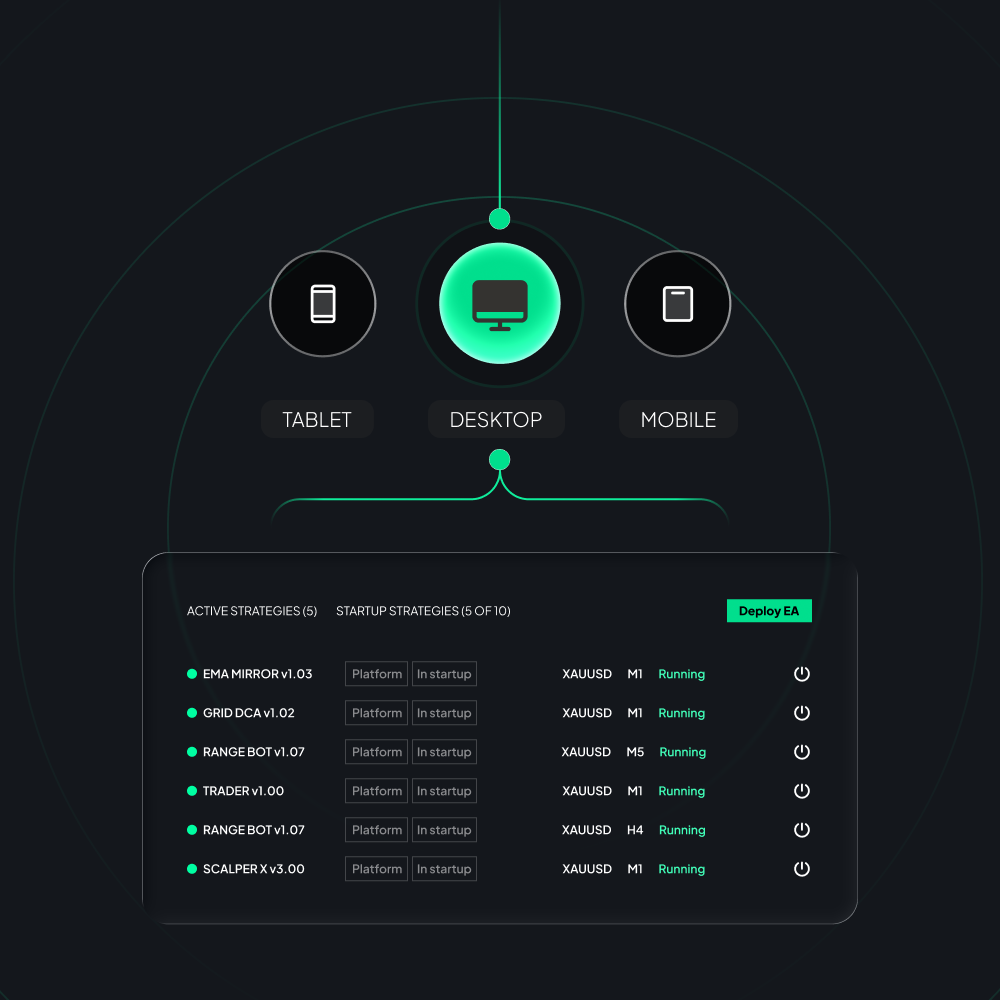
Every connected account becomes an operations job.
What building MT5 automation in-house typically costs a product team once real users connect:
- Delayed Market Validation: Product teams wait months for custom infrastructure before validating user appetite.
- Misallocated Dev Talent: Senior engineers debug MT5 socket drops instead of building core differentiators.
- Operational Chaos: Support and ops teams inherit manual account reconciliations and edge-case incidents.
- Exponential Maintenance: Every active account scales operational overhead, infrastructure load, and support tickets.
- Broken User Experience: Forcing users into external desktop terminals breaks onboarding and churns users.
Infrastructure primitives, not an opinionated UI
Senti provides composable backend building blocks. Build your own user experience; let Senti handle execution plumbing.
Programmatically provision, authenticate, and manage MT5 account lifecycles.

Trigger trades, route orders, and manage strategy logic directly via API.

Stream fills, open positions, equity updates, and P&L metrics back to your UI via Webhooks.

Integrate once via Senti's unified API instead of maintaining individual broker bridges.
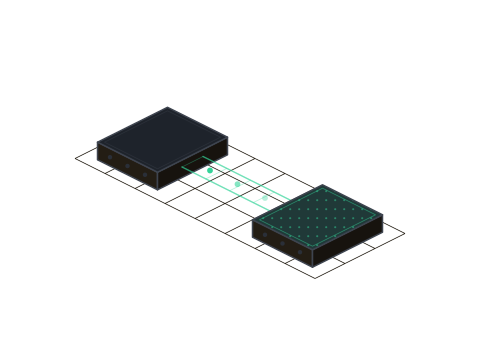
Automated error handling, health checks, and engineering escalations out of the box.
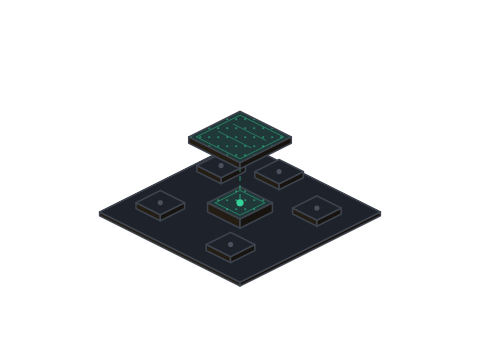
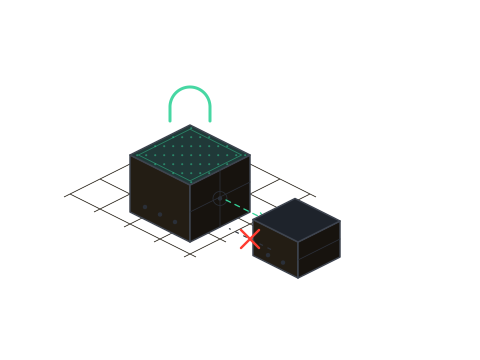
Trade-only authorization ensures user capital stays untouched at the broker at all times.
The exact endpoints, authentication model, sandbox scope, rate limits, and supported brokers are validated against the current API documentation and confirmed during technical evaluation.
Keep what makes your product yours
Senti runs invisible underneath. Your brand, your users, and your commercial relationship stay 100% yours.
 Non-custodial by design
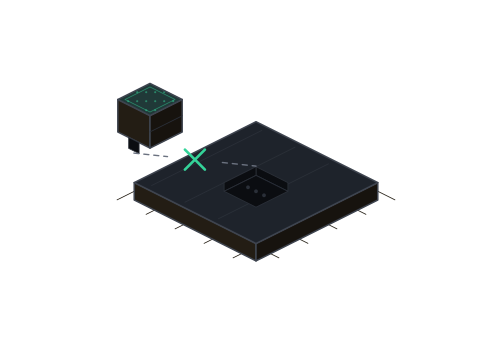
Capital never touches Senti
Funds remain 100% at the user's broker. Senti operates purely on trade-only execution permissions and has zero technical capability to withdraw or transfer capital.
Senti is trading automation infrastructure. It is not a broker, fund manager, copy-trading marketplace, signal seller, or promise of returns.
Engineered for product teams with established distribution
- Earning & Wealth Platforms: Adding automated broker-backed trading products to monetize user deposits.
- Proprietary Trading Apps: Teams demanding full UX control without building an internal execution desk.
- FinTech Neobanks: Introducing FX and commodity automated trading as a modular value-add feature.
- Custom Front-End Teams: Products with dedicated engineering capacity needing raw primitives rather than pre-packaged UIs.
Looking for a turnkey web portal with custom branding instead of API integration? Explore our Trading Groups & Academies solution.
How Senti fits into your existing tech stack
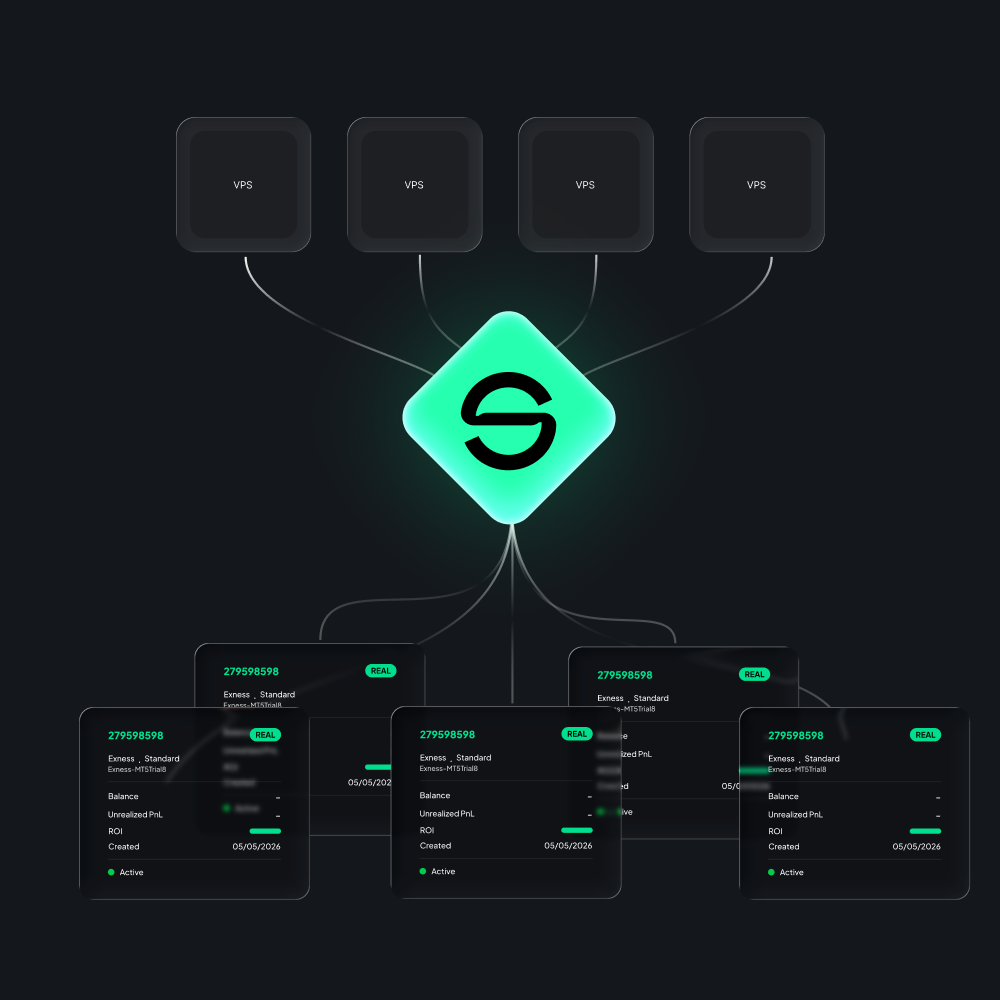 Request & data path
Your User → Your Native App → Your Orchestration Backend → Senti REST API → Broker MT5 Engine
Bidirectional Telemetry: Order execution events, margin utilization, and position states stream asynchronously back to your database via Webhooks.
Endpoint specs, auth tokens, sandbox access, and supported broker pairs are verified during technical discovery.
From infrastructure backlog to immediate market capability
Senti provides the underlying execution engine. Your team remains responsible for product compliance, local regulatory licensing, and client onboarding.
What integrating Senti unlocks for your business
Test market demand with a production-ready trading flow before investing in heavy infrastructure.
Keep your engineering team laser-focused on customer experience, conversion, and retention.
Own user monetization, subscription pricing, and billing terms without platform revenue-share traps.
Pay only for active provisioned accounts, zero heavy upfront capital commitments.
Retain users inside your native application without forcing them to install external terminals.
Mitigate regulatory exposure, funds remain entirely deposited with regulated brokers.
Transparent per-account fees. $0 monthly platform base.
Standard API integration carries zero setup fees and no monthly retainer. Baseline pricing tracks between $10–$12 per active provisioned Trade Account per month, discounting automatically with volume.
Your platform bills end users directly; Senti invoices strictly for provisioned infrastructure capacity. Live beta measured uptime is 99.9%. Production SLAs and response times are formally confirmed in your API contract.
Start with a controlled pilot, scale with verified demand
Map target user journeys, account structures, broker scopes, and primary KPIs.
Confirm auth protocols, data schemas, security boundaries, and required endpoints.
Verify end-to-end account provisioning, order execution, and webhook streams in sandbox.
Establish production error handling, failure boundaries, and support escalation protocols.
Deploy with a closed group of live accounts to validate execution latency and telemetry under real market conditions.
Scale capacity on demand as your active user base grows, backed by institutional SLA guarantees.
The integration timeline depends on your product architecture and the API scope you choose. It is confirmed after technical discovery.
Compare your options
Different categories solve different product problems. The right choice depends on what your team wants to own.
Senti is not a universal replacement for these options. It is the fit when your product needs control of its own customer journey without taking on the entire trading automation infrastructure stack.
API, or a branded platform?
Both routes use Senti's trading automation infrastructure. The decision is about product control and billing responsibility, not a promise of trading performance.
Frequently asked questions
Is the API the same as the Trading Groups & Academies solution? +
Will our users see Senti? +
Who bills the end user? +
What does "non-custodial" mean here? +
What does the API cost? +
Can we begin with one use case? +
How long does integration take? +
Does Senti guarantee trading returns or yield? +
Who owns support when something goes wrong? +
Keep your product. Add the layer.
Bring one target journey, your architecture, and expected Trade Account volume. We will map the smallest useful integration and name the open risks.