 Senti
Senti
For Quant Funds, Family Offices & Prop Trading Teams
Your servers. Our operations.
A managed automation layer on your own infrastructure. You keep capital, strategy IP, broker relationships, and risk. Senti handles deployment, monitoring, and escalation.

These figures are infrastructure activity and availability signals from Senti's live beta, not investment-performance or return claims. Senti provides trading automation infrastructure; it does not promise returns or evaluate whether a strategy will be profitable.
Your edge belongs in research, not infrastructure maintenance
A strategy can be sound while the operations around it remain fragile. Isolated terminals, aging VPS setups, inconsistent deployments, and blurry incident ownership turn your trading desk into a makeshift IT team, compounding costs with every account added.
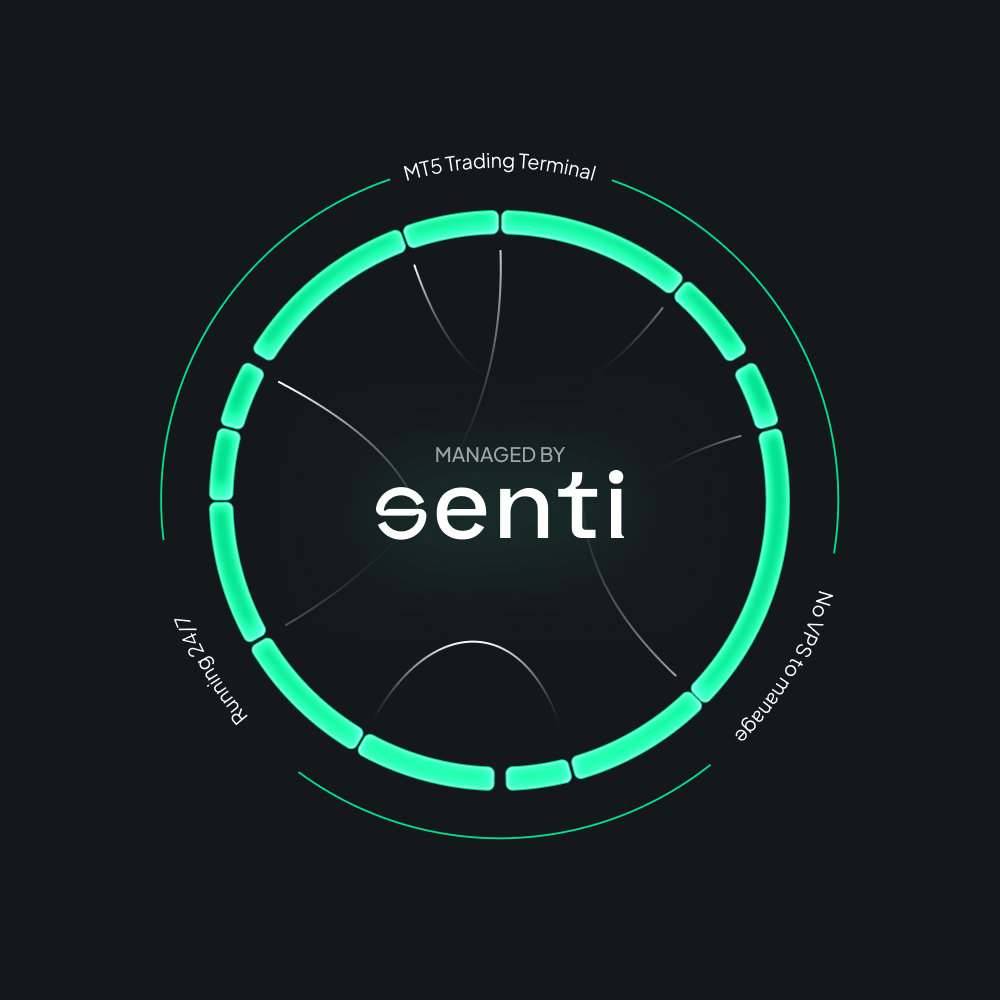
- Wasted Quant Cycles: Researchers lose prime trading hours to terminal crashes and manual server maintenance.
- Siloed Tribal Knowledge: Deployment and recovery steps live in individual heads rather than institutional SOPs.
- Multiplying Attack Surfaces: Every newly added account creates an isolated runtime that demands separate monitoring.
- Operational Disruption: Infrastructure firefighting interrupts alpha generation and obscures accountability.
- Compromised Compliance: Fragmented terminal environments make auditability and security compliance near impossible.
What changes with Senti
Senti establishes an explicit operational boundary: your team owns strategy and execution decisions; Senti guarantees the contracted infrastructure layer.
Consolidated visibility. Isolated account execution.
Senti replaces scattered VPS instances with a managed on-premise operating environment engineered directly around your desk.
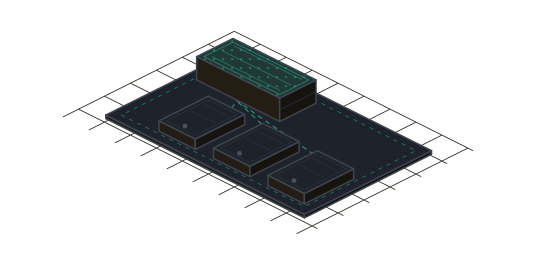
- Cross-Broker Telemetry: Review aggregated execution states and live accounts across brokers without logging into individual machines.
- Per-Account Execution Isolation: Each Trade Account runs in an isolated runtime context, zero state bleed or cross-contamination.
- Institutional Observability: Stream live positions, P&L curves, drawdown limits, and latency telemetry into your primary monitoring console.
- Role-Based Incident Halts: Define strict permissions for pause, stop, and emergency kill-switch actions directly linked to Senti engineering.
- 24/7 Managed Runtime: Senti monitors and maintains runtime stability around the clock, freeing your desk from server maintenance.
Exact telemetry schemas, custom control surfaces, log retention windows, and SLA commitments are formally defined in your on-premise service scope.
Engineered for desks that demand control without operational overhead
Designed for systematic teams who treat trading algorithms as proprietary intellectual property, but refuse to let server ops become an internal product.
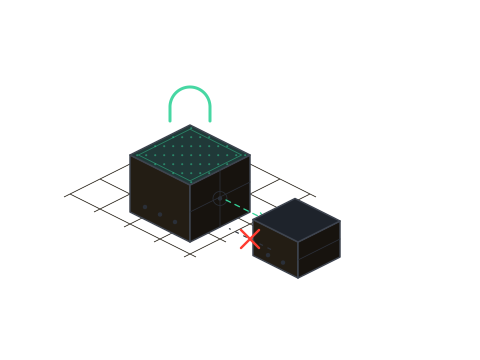
- Systematic Quant Funds: Need institutional-grade runtime stability for proprietary trading models.
- Multi-Trader Prop Desks: Orchestrating automated execution across multiple capital allocations and traders.
- Family Offices: Demand private trading infrastructure strictly confined within their own security perimeter.
- Emerging Asset Managers: Preparing for rigorous institutional due diligence, audit trails, and risk audits.
Capital Guideline: On-premise deployments are tailored for desks operating $500k+ in trading capital, where a private, governed environment justifies dedicated infrastructure.
Final compatibility depends on broker integration scope, environment constraints, and SLA expectations confirmed during technical discovery.
Explicit boundaries. Uncompromised ownership.
Senti does not manage capital, dictate strategy, or touch your broker balances. The operational division of responsibility is mathematically explicit.
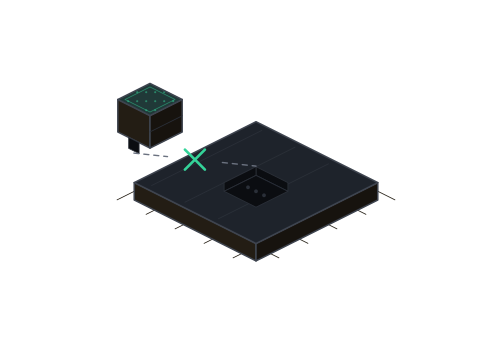 Non-custodial infrastructure
Zero Capital Custody. 100% IP Sovereignty.
Your funds never leave your broker. Senti operates purely as execution middleware via trade-only API access, never requesting source code or withdrawal permissions.
Senti is trading automation infrastructure. It is not a broker, fund manager, copy-trading marketplace, signal seller, or promise of returns.
Why on-premise? Complete environment sovereignty.
Deploy directly inside your own server room, dedicated VPC, or private cloud. Retain full physical data sovereignty without running the operations.
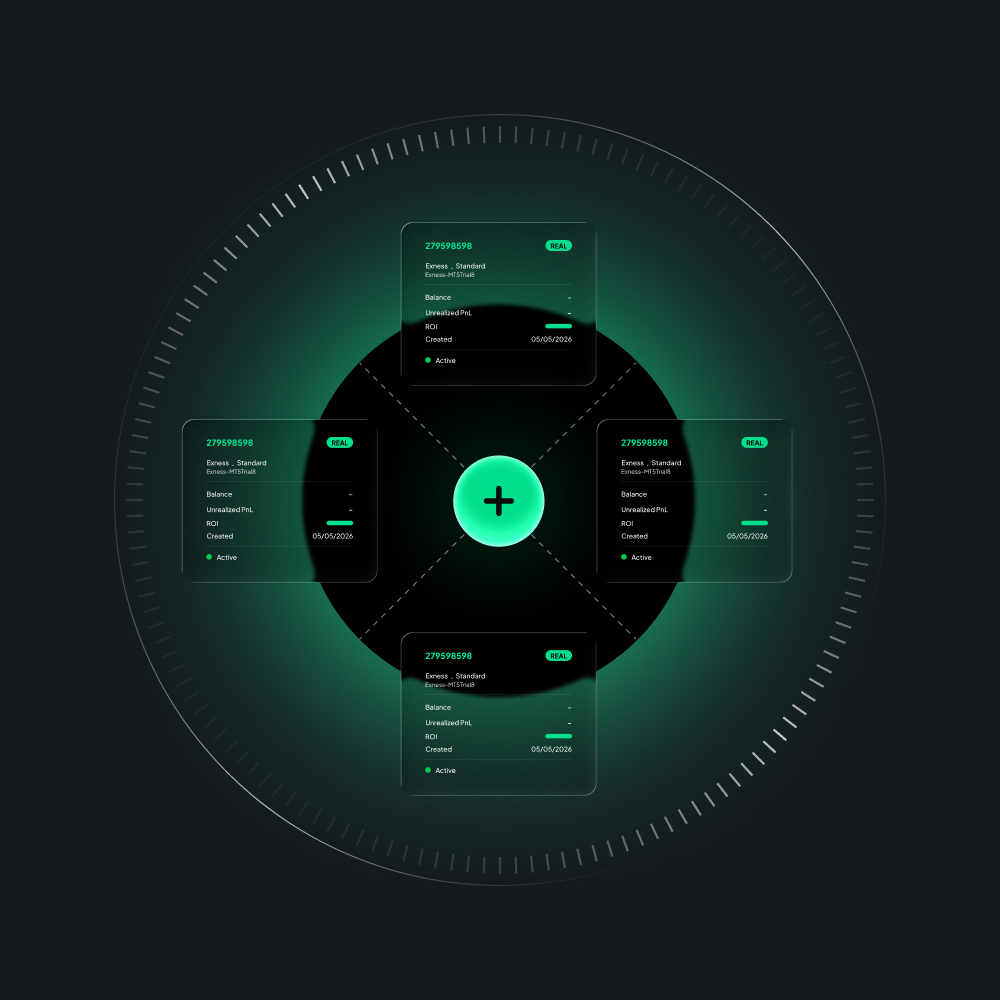
- Data Sovereignty: Retain complete governance, execution logs and API tokens remain inside your secure perimeter.
- Dedicated Resource Allocation: Eliminate shared noisy-neighbor risks with bare-metal performance tuned to your order flow.
- Custom Security Compliance: Satisfy internal governance, firewall policies, and jurisdictional regulatory audits effortlessly.
- Clear Incident SLA: Predetermined response windows and direct engineering escalation paths before live cutover.
$2,000 per month. Zero setup fees.
Predictable flat-fee infrastructure service covering private on-premise deployment, continuous engine patching, uptime SLAs, and direct engineering escalations.
- 100% Rebate Retention: You keep all broker rebates and volume tiers. Senti never takes a cut of your volume.
- Zero Hidden Fees: No onboarding penalties or platform setup surcharges for standard Quant engagements.
- Contracted SLA: Availability tiers, maximum latency envelopes, and incident response times confirmed in writing.
Historical beta uptime reflects operational telemetry, not a default contract. Contracted uptime and escalation response windows are confirmed in each service agreement.
Select the operational boundary that fits your desk
Evaluate how Senti Quant compares against common industry execution paths:
Strong fit when you operate proprietary strategies and require a dedicated, non-custodial automated execution environment without building an ops team.
Operating trade-off: You remain responsible for strategy alpha and capital risk; Senti manages the infrastructure layer.
Strong fit when strategy discovery, social proof, or retail distribution is central to your model.
Operating trade-off: You are forced into public retail platforms with execution lag, platform custody risks, and fee skimming.
Strong fit when your core goal is offering a retail-branded trading screen to third-party clients under broker sponsorship.
Operating trade-off: Lacks native multi-account orchestration, automated risk guardrails, and isolated quant execution.
Strong fit when core execution infrastructure is your primary business IP and you have the budget to staff a permanent 24/7 DevOps team.
Operating trade-off: Extremely expensive; ties up senior engineering talent in terminal maintenance rather than quantitative alpha research.
A controlled path to production deployment
Map your active accounts, target brokers, strategy artifacts, security controls, and operational expectations.
Establish the definitive operational boundary, specifying exact permissions, access scopes, and fail-safe protocols.
Finalize on-premise resource sizing, dedicated host specs, firewall allowances, and acceptance criteria.
Deploy a restricted pilot cohort to thoroughly test latency, fill integrity, and edge-case error handling.
Transition into full production with active SLA monitoring, defined escalation paths, and scheduled architecture reviews.
Deployment timelines are finalized following initial discovery based on your internal security requirements and broker environment complexity.
Frequently asked questions
Does Senti need our strategy source code? +
Does Senti hold or manage our capital? +
Does Senti guarantee strategy performance? +
What is included in the $2,000 monthly fee? +
Is there a setup fee? +
Does Senti take part of our broker rebate? +
Is $500k a hard capital requirement? +
How quickly can we deploy? +
Put infrastructure on a contract.
Bring your environment, account scope, and operating requirements. We will confirm the fit and define the smallest responsible path to production.